If you buy through our links, Amazon pays us a small commission at no extra cost to you. It never affects our scores. How we are funded.
“Carbon fibre” sounds like MotoGP: light, strong, the ultimate in safety. It also costs a lot more. But is it safer? Is it much lighter? Short answer: a bit lighter, not automatically safer, and only worth it in certain cases.
The three shell materials
- Polycarbonate or thermoplastic (injection-moulded): cheap to make. Usually heavier, and makers produce fewer shell sizes.
- Composite fibre (glass, aramid, carbon…): layers of fibre and resin. Lighter and stiffer. Most mid to high-end helmets use it.
- Carbon fibre (fully or mostly): the lightest for a given stiffness, and the most expensive.
Is a carbon helmet safer?
Not necessarily. A helmet’s protection depends on the whole package: shell, EPS liner (the polystyrene that absorbs the impact), fit and approval. A polycarbonate helmet approved to ECE 22.06 has passed the same tests as a carbon one with the same approval. For an independent comparison, check the helmet’s SHARP rating: see SHARP helmet ratings explained.
What carbon does is deliver the same strength with less weight. And less weight does help: less neck fatigue and, in a crash, less mass rotating with your head.
How much lighter?
Less than you might think. Here are the claimed weights from our comparison:
| Helmet | Material | Claimed weight |
|---|---|---|
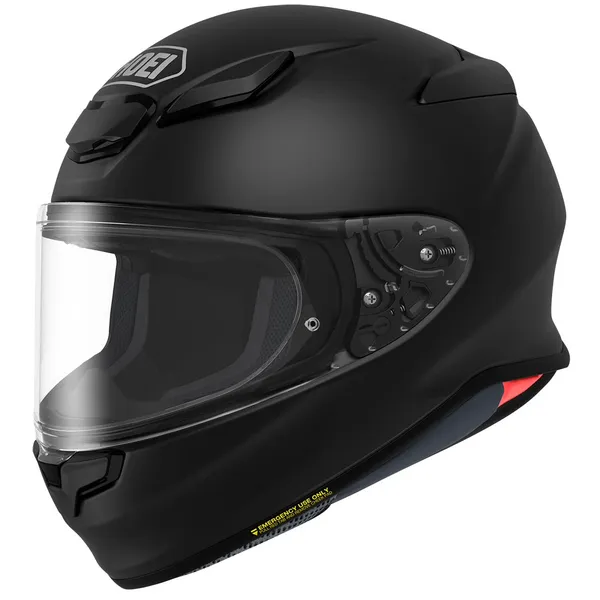
| Shoei NXR2 | Multi-composite fibre (AIM) | 1,390 g |
| LS2 Storm II | KPA thermoplastic | 1,400 g |
| HJC RPHA 71 | Composite with carbon, glass and aramid | 1,567 g |
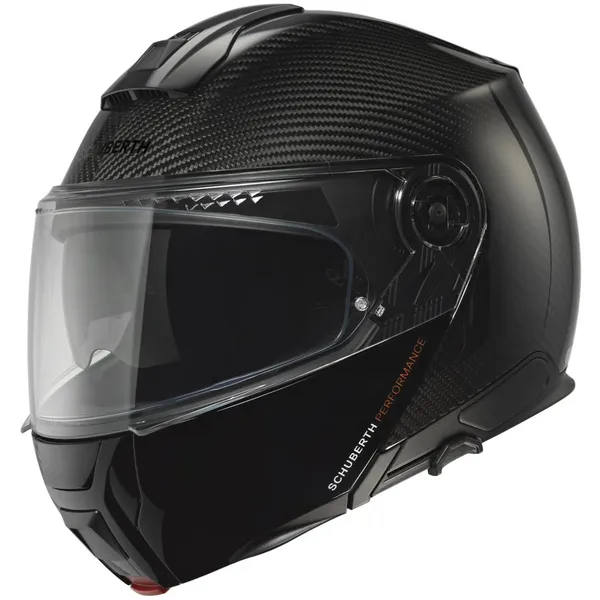
| Schuberth C5 (modular) | Carbon-reinforced glass fibre | 1,660 g |
The lightest one is not carbon, and a thermoplastic helmet is almost as light. Weight also depends on features: sun visor, flip-front mechanism, padding… Always compare the real weight of the model, not the material.
When carbon is worth it
- Track days or sporty riding, where every gram and stiffness matter.
- Very long tours, if you already have the rest of your kit and want the lightest helmet with the features you need (a modular, say).
- You like the look of exposed carbon. A perfectly valid reason.
When it is not
- On a tight budget: a good composite or polycarbonate helmet in your exact size beats a carbon one that does not fit.
- If you want quiet or comfort: those depend more on design and padding than on the shell material.
Hybrid fibres, such as HJC’s PIM+ on the RPHA 71 (carbon, glass and aramid), are a good middle ground: close to carbon’s weight at a more sensible price.
Compare materials and weights in our full-face helmet guide or the comparison tool.