If you buy through our links, Amazon pays us a small commission at no extra cost to you. It never affects our scores. How we are funded.
In a hurry?
- Best premium helmetShoei NXR28.7Check price
- The lightestAGV K6 S8.6Check price
- AlternativeShoei GT-Air 38.7Check price
- AlternativeArai Quantic8.6Check price
- Best for touringHJC RPHA 718.6Check price
- AlternativeShark Spartan GT Pro Carbon8.5Check price
- Best valueLS2 FF800 Storm II8.1Check price
- AlternativeHJC i717.9Check price
- Best budget buyMT Thunder 4 SV7.5Check price
Your helmet is the one piece of kit where there are no shortcuts. In this guide we explain which specs to look at, which ones are marketing, and which nine full-face helmets we would buy today for each budget.
Is my helmet road legal in the UK?
In the UK, a motorcycle helmet must meet one of these standards:
- British Standard BS 6658:1985, with the BSI Kitemark.
- UN ECE Regulation 22.05 or 22.06.
- An equivalent standard from a European Economic Area country.
You will find the ECE label sewn onto the chin strap. All the helmets in this guide are ECE 22.06, so they are fully road legal in the UK.
What ECE 22.06 adds
ECE 22.06 replaces 22.05 and makes testing considerably tougher:
- Impacts at several speeds and on more points of the shell.
- An oblique impact test that measures head rotation, linked to some of the most serious brain injuries.
- Tests on the visor against high-speed impacts and on accessories sold with the helmet.
If you have a 22.05 helmet in good condition you can keep using it, but if you are buying new, go for 22.06.
SHARP ratings
The UK also has SHARP, a government helmet safety rating scheme that awards up to five stars after its own impact tests. It is a useful extra reference: if a helmet you are considering has a SHARP rating, check it on the official SHARP website before you buy.
Weight: what you will feel on every ride
A modern full-face weighs between 1,300 and 1,700 g. It sounds like a small difference, but on a four-hour ride an extra 200 g shows up in your neck, especially above 60-70 mph when the wind pushes the helmet.
Note: the weight quoted by brands is usually for one size (normally M). An XL can weigh 100 g more.
Shell sizes: the spec almost nobody checks
The shell is the outer casing. Budget brands make one or two shell sizes and adjust the fit with more or less padding. Premium brands make three or four.
Why does it matter? With a single shell for every size, a size S helmet is as big on the outside as an XL: heavier, more leverage on your neck and more wind. If you wear a small or large size, look for at least three shell sizes.
How to get the size right
- Measure your head with a soft tape, one finger above your eyebrows and ears, around the widest part.
- Check the brand’s size chart: every maker has its own.
- With the helmet on, your cheeks should feel pressed and the helmet should not turn when you move your head.
- Wear it for 15-20 minutes. If a pressure point appears on your forehead, it is not the right shape for your head.
A new helmet always beds in a little. If it feels totally comfortable in the shop, it will probably end up too big.
Our ranking
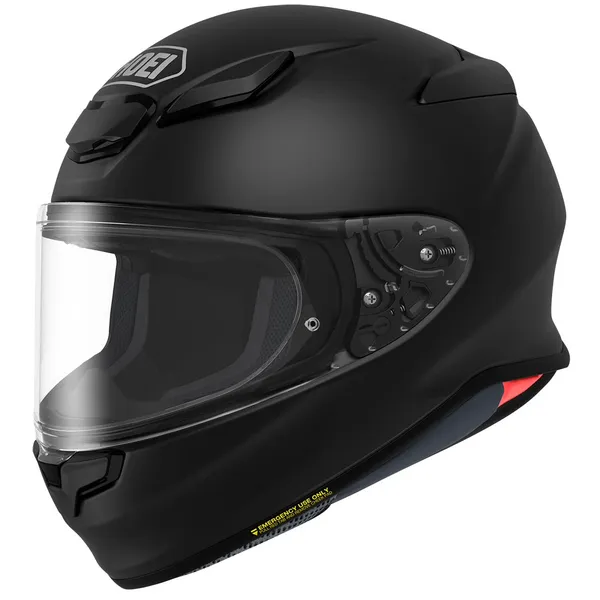
Shoei NXR2
 Shoei
The lightest ECE 22.06 helmet Shoei makes. Expensive, but you feel every gram saved on long rides.
- Weight
- 1,390 g
- Approval
- ECE 22.06
- Shell sizes
- 4
- Shell material
- Multi-composite fibre (AIM)
Ideal for: Riders who cover big miles and want the lightest, best-fitting helmet they can afford.
The lightest and best-fitting of the group. If you do not need a sun visor and the budget allows, it is the purchase you are least likely to regret.
AGV K6 S
The lightest full-face in our comparison: 1,255 g, four shell sizes and ECE 22.06 approval.
- Weight
- 1,255 g
- Approval
- ECE 22.06
- Shell sizes
- 4
- Shell material
- Carbon-aramid fibre
Ideal for: Riders who want the lightest possible helmet for fast roads, sports bikes or nakeds.
The lightest in our comparison: 1,255 g and four shell sizes. If you can live without a sun visor, it is the sports full-face you will appreciate on every mile.
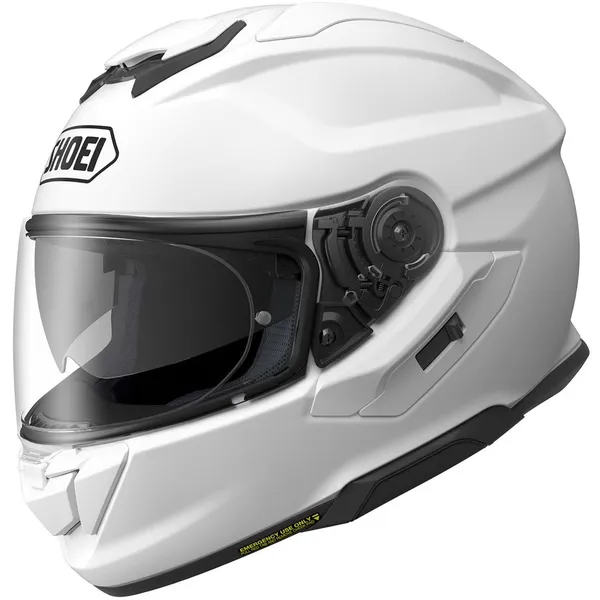
Shoei GT-Air 3
 Shoei
Shoei's touring full-face: a bigger sun visor, Pinlock in the box and ready for a fully integrated intercom.
- Approval
- ECE 22.06
- Shell sizes
- 3
- Shell material
- Multi-composite fibre (AIM)
- Internal sun visor
- Yes
Ideal for: Tourers who want a premium full-face with a sun visor and an invisible intercom.
Shoei’s touring full-face: sun visor, Pinlock in the box and ready for an invisible intercom.
Arai Quantic
Arai's first ECE 22.06 helmet: a hand-made shell, great ventilation and Arai's philosophy of a shell that glances off rather than grips.
- Approval
- ECE 22.06
- Shell material
- PB-eCLC fibre (peripherally belted laminate)
- Internal sun visor
- No
- Pinlock anti-fog
- Included (120 Max Vision)
Ideal for: Riders who value Arai's hand-made construction and fit, and do not need a sun visor.
A hand-made shell, great ventilation and a Pinlock 120 included. For riders who buy into Arai’s approach to safety and do not need a sun visor.
HJC RPHA 71
The best-balanced touring full-face: sun visor, good insulation and a composite fibre shell.
- Weight
- 1,567 g
- Approval
- ECE 22.06
- Shell sizes
- 4
- Shell material
- Composite fibre PIM+ (carbon, glass and aramid)
Ideal for: Tourers and weekend riders who want a sun visor without dropping to a mid-range helmet.
The best premium option if you tour a lot: sun visor, double D-ring and four shell sizes.
Shark Spartan GT Pro Carbon
A carbon full-face with a sun visor and a Pinlock 120 in the box: sporty to look at, comfortable to tour in.
- Weight
- 1,450 g
- Approval
- ECE 22.06
- Shell sizes
- 2
- Shell material
- Carbon fibre and multi-axial glass fibre
Ideal for: Riders who want a carbon full-face with a sun visor for road riding and touring.
Carbon, a sun visor and a Pinlock 120 included. A very good road option if your size is not at either extreme.
LS2 FF800 Storm II
Almost everything expensive helmets offer, for a lot less money. The logical buy if you want to stay mid-range.
- Weight
- 1,400 g
- Approval
- ECE 22.06
- Shell material
- KPA thermoplastic
- Internal sun visor
- Yes
Ideal for: Riders who commute and ride at weekends and want a light full-face with a sun visor without overspending.
The most sensible buy for most riders: almost the same weight as the Shoei for much less money. It loses out on quietness and finish.
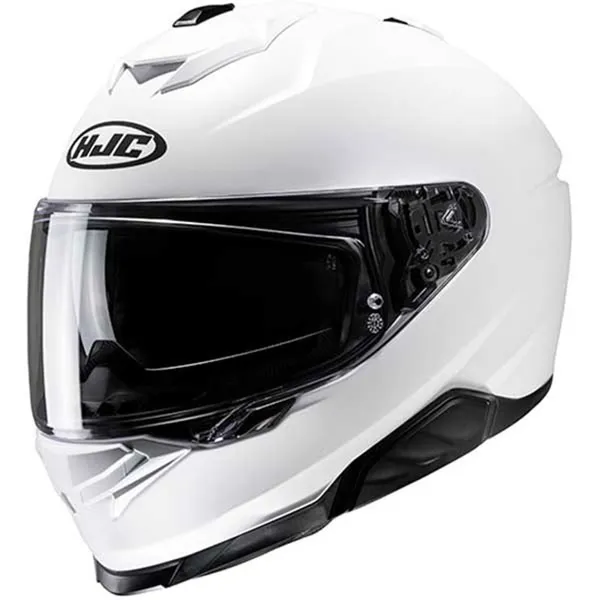
HJC i71
 HJC
A comfortable, well-equipped full-face at a mid-range price. Pinlock in the box and an adjustable sun visor.
- Weight
- 1,700 g
- Approval
- ECE 22.06
- Shell sizes
- 3
- Shell material
- Polycarbonate
Ideal for: Riders who want a comfortable, complete full-face for commuting and touring without going premium.
Heavier than the Storm II, but more comfortable and with the Pinlock insert in the box.
MT Thunder 4 SV
The most sensible ECE 22.06 full-face to start with. It ticks the safety boxes and costs very little.
- Weight
- 1,500 g
- Approval
- ECE 22.06 and DOT
- Shell sizes
- 2
- Shell material
- HIRP polycarbonate
Ideal for: New riders on their first bike or scooter who need a safe, complete full-face on a tight budget.
For new riders or as a pillion helmet. ECE 22.06, with a sun visor, at a very keen price.
Looking for a flip-up helmet? See our modular helmet guide.
FAQ
How often should I replace my helmet?
After any significant impact, even if there is no visible damage: the polystyrene liner no longer protects the same way. Without impacts, most manufacturers recommend checking or replacing it after 5 years of use.
Is a more expensive helmet safer?
Not necessarily. Every ECE 22.06 helmet passes the same tests. The difference is in weight, fit, noise, ventilation and finish. A budget helmet that fits well protects better than an expensive one that is too big.